
5 Upgrades Worth Paying For in a Miami New Construction Home (And 3 That Aren't)
Miami's heat, humidity, and hurricane season change the math on new construction upgrades. Find out which 5 are worth the premium and which 3 you can skip without regret.
The builder hands you a glossy upgrade menu, your pulse quickens, and suddenly you're mentally spending $80,000 on things you haven't even touched yet. If you've ever sat in a new construction design studio in South Florida and felt that specific kind of financial vertigo, you are not alone, and this article is for you.
Miami is not like the rest of the country when it comes to new construction decisions. The climate, the hurricane code requirements, the humidity that never really takes a day off, the insurance landscape, the resale expectations from international buyers who have seen everything, all of it shifts the math on what's worth your money and what is quietly overpriced. According to Miami-Dade County's Environmental Resources Management, electricity and fuel used in buildings accounts for 41% of the county's greenhouse gas emissions, which tells you something important: in this market, how a home is built and sealed is not a secondary concern. It is a primary financial and environmental one. Before you add the wine fridge and the marble waterfall island to your cart, here is the honest breakdown of what actually moves the needle in a Miami new build.
Worth It: Impact Windows and Doors With the Right Specs
If there is one upgrade that pays dividends on literally every front in South Florida, it is impact-rated windows and doors with proper Low-E coatings and argon gas fills. This is not simply a hurricane preparedness checkbox. Impact windows in Miami function as a financial multi-tool, reducing solar heat gain, lowering the workload on your AC system, cutting noise from outside, and, critically, qualifying your home for meaningful insurance premium reductions. Homeowners who upgrade to energy-efficient impact windows typically see the ROI close within five to seven years through combined energy savings alone, and the additional benefit of stronger buyer confidence at resale makes them one of the few builder upgrades that genuinely pulls its weight across every category.
The wrong move here is accepting whatever standard impact package the builder offers without asking about the glass performance specifications. Miami-Dade and Broward County enforce rigorous building codes that set minimum standards, but minimum is not optimal. Ask specifically about the Solar Heat Gain Coefficient (SHGC) rating. The lower that number, the less solar heat enters your home, and in a city where the sun operates like a second landlord, that number matters year-round.
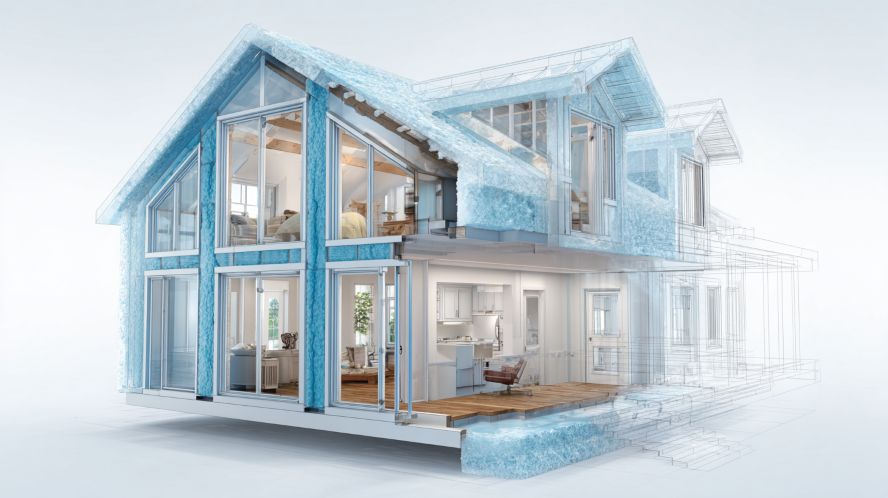
Worth It: Spray Foam Insulation Upgrade
Most new construction builders in Miami default to fiberglass batt insulation because it meets code and it is cheap to install. The problem is that fiberglass does very little for air sealing, and in South Florida's humid climate, air sealing is the difference between a home that breathes efficiently and one that makes your AC unit work a second job all summer. Upgrading to closed-cell spray foam insulation during the build phase, before the drywall goes up, is one of the highest-leverage decisions you can make at the design studio.
Closed-cell spray foam creates an airtight seal that has been shown to be 25 times less permeable to air infiltration than standard insulation options. It also resists moisture intrusion, which in Miami's humidity is not a small consideration. The upgrade will cost more during construction, but doing it after the fact costs dramatically more in labor and disruption. This is a classic "pay now or pay more later" scenario, and new construction is the moment when the window is wide open and the walls are still accessible.
The key benefits in the South Florida context:
- Reduces HVAC runtime by keeping conditioned air inside the envelope
- Acts as a moisture and mold barrier in a high-humidity environment
- Improves structural rigidity of exterior walls
- Delivers energy savings that compound over the life of the home
Worth It: High-Efficiency Two-Stage HVAC System
Why Your Cooling System Is the Most Important Mechanical Decision You'll Make
A builder-grade single-stage HVAC system does one thing: it runs at full blast until it hits the set temperature, then shuts off. That on-off cycling is inefficient, loud, and hard on the system's components. In Miami, where your air conditioner runs for eight or more months a year with genuine intensity, that inefficiency isn't a small inconvenience. It is a recurring monthly cost that compounds across the life of your ownership.
A two-stage or variable-speed HVAC system runs at lower capacity most of the time and ramps up only when conditions demand it. This approach delivers better dehumidification (a genuine South Florida concern), quieter operation, longer equipment life, and meaningfully lower electricity bills. Smart cooling systems are not optional in Miami's climate. When your AC runs eight-plus months per year, efficiency upgrades pay for themselves relatively quickly. The premium over builder-grade equipment is real, but it is one of the few upgrades where the monthly savings are visible from the first bill.
"In South Florida, the HVAC system is the heart of the home, not an afterthought. We consistently advise buyers to invest in a variable-speed system during construction rather than retrofitting later, the labor and disruption costs of replacement far outweigh the upgrade premium at the design studio stage." — Carlos Menendez, Sales Director at Mountain Cove Homes, a South Florida new construction builder whose approach to buyer-first building has been covered by industry publications including Houzz and Builder Magazine.

Worth It: Energy-Efficient Windows (But Which Kind?)
The Real Debate Buyers Skip Over
Upgrading your windows in a hot climate like Miami is not a cosmetic conversation. It is a financial one. Every window in your home is either helping your AC system or fighting it, and over the course of a decade of South Florida summers, that battle has a price tag attached to it. The instinct most buyers have is to say yes to every window upgrade the builder offers, but that assumption deserves a harder look before you sign.
Before you tell your builder to upgrade every window in the house, it is worth reading this breakdown of when awnings actually outperform expensive window packages, because your wallet may have a different opinion than your design instincts. In some configurations, particularly on south-facing and west-facing exposures, strategically placed motorized screens deliver comparable or better solar heat reduction at a fraction of the cost of full window replacement upgrades.
Meanwhile, energy auditors consistently flag several overlooked systems that quietly inflate bills in new homes, things most buyers never think to ask their builder about. This review of the most common hidden culprits behind high energy costs is a useful read before you finalize your window and shading decisions with your builder. The takeaway is that window performance and building envelope decisions are interconnected, and treating them in isolation means you will likely over-invest in one area while leaving gaps in another.
The smartest approach in new construction is to prioritize Low-E impact glass with a strong SHGC rating on your primary window package, then evaluate awning or shading solutions for specific high-sun exposures rather than defaulting to premium glass everywhere. The combination often outperforms the all-premium-glass approach at a better total cost.
Worth It: Whole-House Generator Pre-Wire
Miami's Power Grid Has a History, and You Should Plan Accordingly
This upgrade is one that buyers rarely think to ask about at the design studio, but it is the one they call their builder wishing they had added the moment the first serious storm of the season arrives. A whole-house generator is not a luxury in South Florida. For many homeowners, it is the difference between staying in their home during a multi-day outage and evacuating to a hotel with their family, their pets, and whatever they could grab on the way out.
The smart move during new construction is not necessarily to purchase and install the full generator immediately. It is to have the electrical panel pre-wired and a transfer switch installed while the walls are open and the electrician is already on-site. The incremental cost during construction is a fraction of what a retrofit costs after the walls are closed and finished. When you are ready to add the generator itself, whether that is before move-in or a year later, the heavy lifting is already done. In a market where "storm-ready" is a genuine selling point and buyers increasingly expect resilience features in premium new builds, a pre-wired generator connection adds resale credibility that most cosmetic upgrades simply cannot match.

Not Worth It: Builder-Premium Countertops
The Design Studio Upsell That Pays the Builder, Not You
This is perhaps the most emotionally compelling upgrade in any new construction design studio and one of the least financially sound decisions a buyer can make at this stage. The marble waterfall island, the exotic quartzite, the dramatic book-matched stone panel: all of it looks breathtaking in the model home, and all of it comes at a builder premium that inflates what you would pay if you sourced and installed those same materials independently after closing.
Builders typically work with a single stone supplier and present limited options within a narrow markup window. The selections available through the builder are rarely the best combination of quality, selection, and value. If you close with neutral laminate or standard quartz and upgrade your countertops twelve months later through your own vendor, you will almost certainly get more stone for less money, with a wider selection and better installation quality. Delaying this upgrade is not a compromise. It is a strategy.
Not Worth It: Premium Appliance Packages From the Builder
The design studio appliance packages at most Miami builders are a study in elegant overpaying. Builders source appliances through preferred vendor relationships that are structured for builder convenience, not buyer savings. The premium appliance package they offer at a $15,000 to $20,000 upgrade often includes models you could source independently from a major retailer during a promotional event for significantly less.
There is also a practical timing consideration: appliance technology evolves quickly, and the flagship model the builder presents today may have a successor released within eighteen months of your closing date. Purchasing your appliances independently after closing gives you the ability to shop sales, choose your preferred brands without restriction, and align your selections with the kitchen's actual layout and usage patterns rather than what the design studio's vendor relationship happens to carry. The one category where builder-included appliances make sense is the basic package. Accept the base package, walk away from the upgrade, and buy your own.
Not Worth It: Upgraded Tile in Secondary Bathrooms and Laundry Rooms
Save the Exotic Finishes for Spaces That Earn Their Keep
The finishing finish budget in a Miami new construction home needs to be allocated strategically, and secondary bathrooms and laundry rooms are rarely where it earns its return. These spaces do not drive buyer decisions at resale, they do not appear in listing photography in meaningful ways, and the daily occupants of the home spend a fraction of their time there compared to the primary bath, the kitchen, or the main living areas.
"We always tell our clients to put their finish budget where buyers actually stop and look," says Jamie Portillo, a licensed general contractor in Miami-Dade with over fifteen years of new construction experience. "Nobody has ever told me they bought a house because the guest bathroom had premium floor tile. Save the upgrade budget for the primary suite and the kitchen. That's where it shows."
Builder-grade tile in a laundry room or secondary bath is perfectly functional, easily replaceable if your preferences change, and not the kind of decision you will lose sleep over at resale. The money those upgrades cost is better reallocated toward the insulation, the HVAC, the windows, or the generator pre-wire. Those are the decisions that age well.
The Upgrades That Outlast Everything Else
The tension in any new construction design studio is between what feels exciting in the moment and what actually protects your investment over time. In Miami, where the climate is relentless and the real estate market rewards homes that perform as well as they look, the unsexy upgrades almost always win. Spray foam insulation, a two-stage HVAC system, properly specified impact windows, and a generator-ready electrical panel are not the upgrades that photograph well on Instagram. They are the upgrades that keep your utility bills manageable in August, keep your home comfortable during a power outage, and give the next buyer a reason to pay a premium when you eventually decide to sell.
Skip the builder's countertop package. Walk past the premium tile selections for rooms that barely get photographed. Buy your appliances on your own schedule at a price that works for you. And put the money you save toward the upgrades that Miami's climate, hurricane history, and real estate market have already decided are worth it. Your future self, standing in a comfortable, efficient, storm-ready home with a bill that doesn't make your stomach drop, will agree.